Engineering9 min read
High mast lighting towers: heights, lamp layouts and specifications explained
A high mast lights a large area from a single point: a highway interchange, a railway yard, a port, the haul road of an open cast mine. Done well, it replaces a forest of short poles with one structure that is safer to maintain. Done badly, it becomes a tall problem. This guide explains what a high mast is made of and which decisions actually drive cost and performance.
What counts as a high mast
In Indian practice a high mast is a lighting structure from about 12 m up to 30 m or more, carrying a ring of floodlights on a lantern carriage at the top. The most common heights in tenders are 12.5, 16, 20, 25 and 30 m. Below about 12 m the job is usually done by ordinary street light poles; above 30 m the structure is closer to a telecom tower in design effort.
The parts of a high mast
- Shaft. A tapered polygonal tube, usually 16 or 20 sided, made in two to four sections that slip over each other on site. The slip joint avoids field welding.
- Base plate and foundation bolts. The shaft is bolted to a cast in bolt cage in a reinforced concrete foundation designed from the soil report.
- Lantern carriage. The ring or frame that holds the floodlights. It is raised and lowered along the shaft rather than fixed at the top.
- Raising and lowering mechanism. A winch at the base, usually motorised with a manual fallback, and stainless steel wire ropes running over pulleys in the head frame. Maintenance happens at ground level, with no crane or aerial platform.
- Head frame and latching. When raised, the carriage latches mechanically so that the ropes are not carrying the load in service.
- Lightning finial and earthing. A finial at the top and a proper earth pit at the base.
- Aviation obstruction light. Required on tall masts near airports and flight paths.
Corrosion protection and wind
The shaft is hot dip galvanised after fabrication. Indian specifications usually refer to IS 4759 and IS 2629 for the coating and the process, and set a minimum coating thickness. Galvanising after fabrication matters, because it protects the inside of the tube and every weld.
The structure is designed for the wind load at the site using IS 875 (Part 3), which divides India into basic wind speed zones. A 30 m mast in a coastal cyclone zone needs a heavier shaft and foundation than the same mast in the Gangetic plain. Ask the supplier to state the design wind speed on the drawing.
How many fittings, and how much wattage
The answer comes from a photometric layout, not a rule of thumb, but typical starting points look like this. Spacing between masts is often three to four times the mounting height, depending on the illuminance you need at the midpoint.
| Mast height | Typical fittings | Common uses |
|---|---|---|
| 12.5 m | 4 to 6 flood lights | Small junctions, depots, parking yards |
| 16 m | 6 to 8 flood lights | Township squares, bus terminals, plant yards |
| 20 m | 8 to 10 flood lights | Highway interchanges, railway yards, mines |
| 25 m | 10 to 12 flood lights | Toll plazas, ports, large industrial yards |
| 30 m | 12 or more flood lights | Container terminals, stadiums, large interchanges |
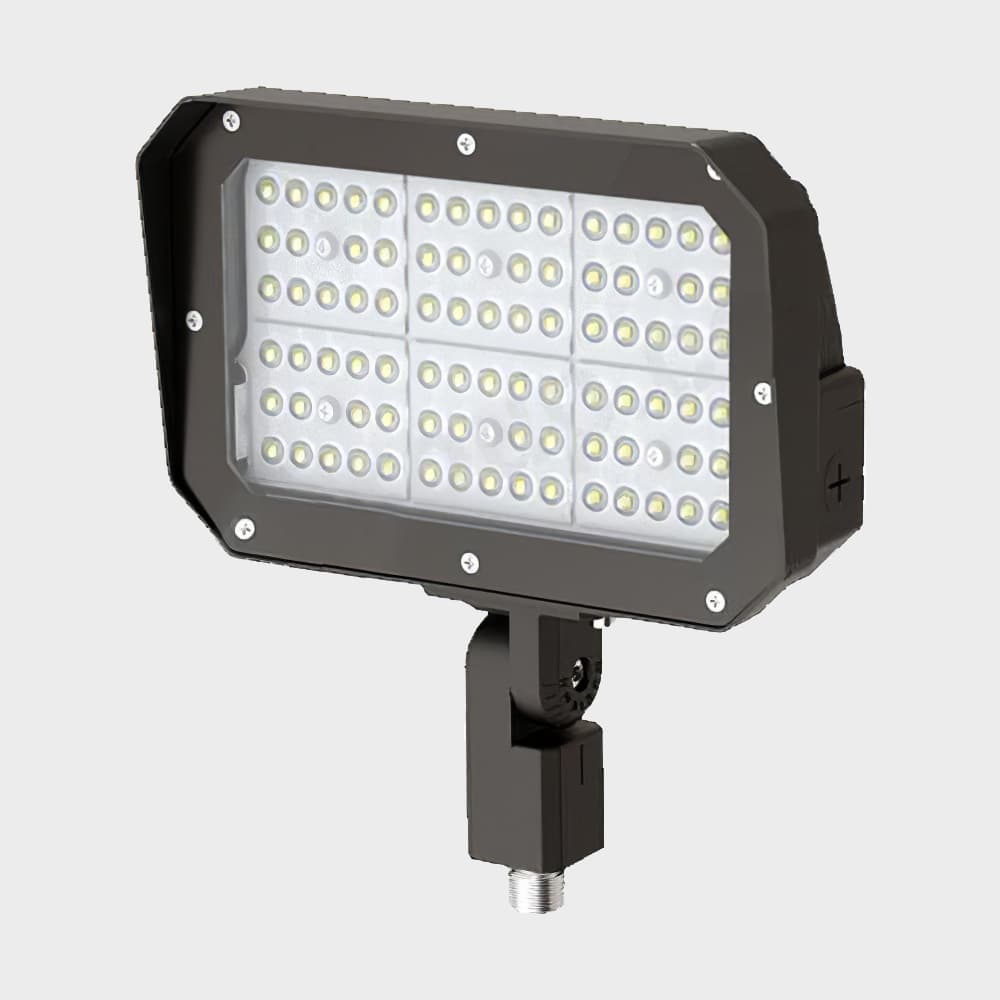
LED flood lights have largely replaced 400 W and 1000 W metal halide and sodium lamps on high masts. The practical gains are lower wattage for the same illuminance, instant restrike after a power cut, and a much longer interval between visits to lower the carriage.
High masts in mines and industrial sites
Open cast mines and coal handling plants are hard on lighting: dust, vibration from blasting and heavy vehicles, and long distances between supply points. For these sites, ask for a heavier lantern carriage, dust resistant fittings rated IP66, and a winch that can be operated manually if the site supply is unreliable. Temporary or shifting work areas are often better served by a trolley mounted light tower that moves with the face.
What to put in the specification
- Mounting height, number of sides and section count
- Design wind speed and IS 875 reference
- Galvanising standard and minimum coating thickness
- Raising and lowering system with motor rating and manual override
- Number, wattage and optic of flood lights, with a photometric layout
- Foundation design basis and who is responsible for the soil test
Published by Acromax Industries, Noida. Last reviewed . Standards are revised from time to time; the current tender document always governs.